


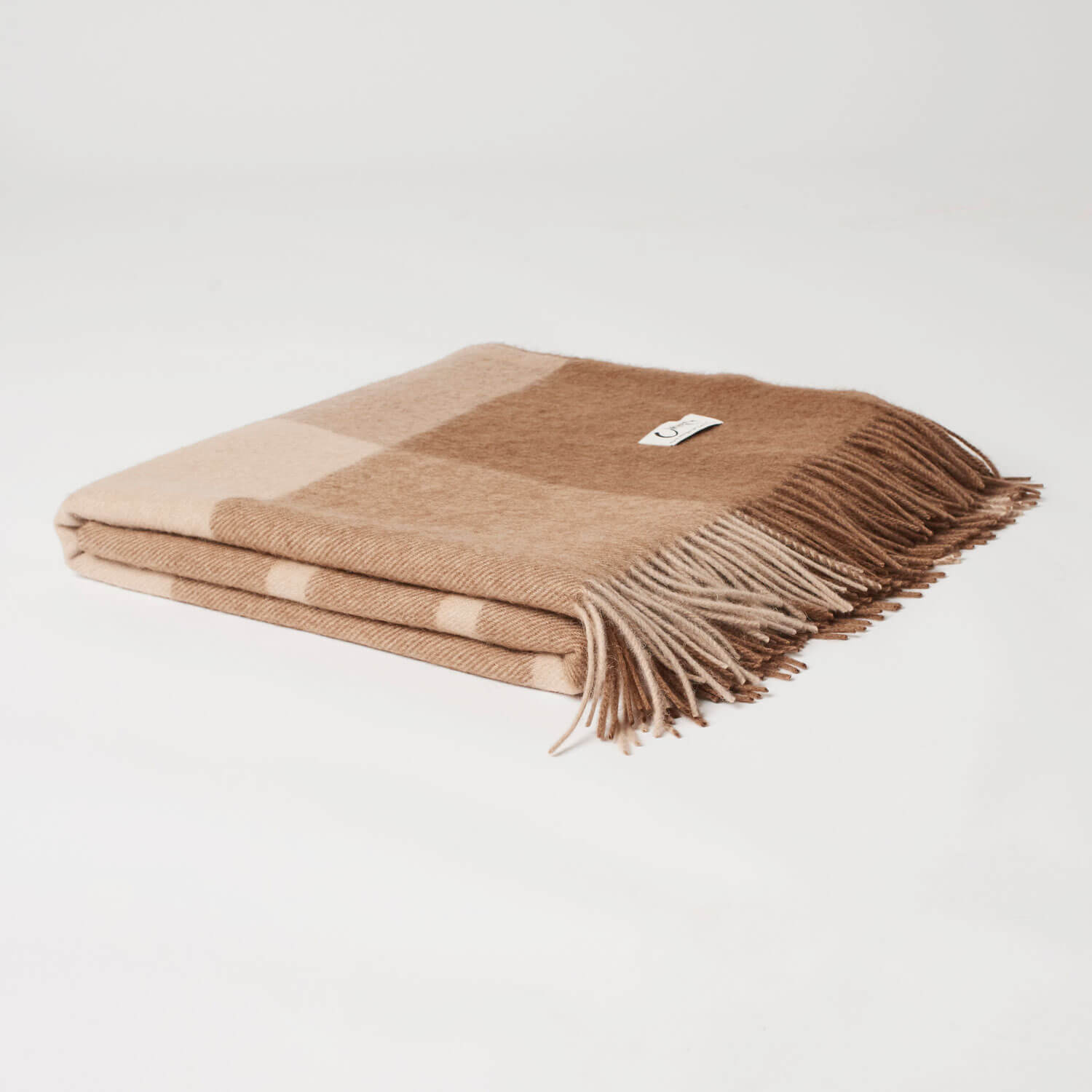
In a world where our choice of materials is becoming increasingly conscious, many people are looking for natural fabrics that not only feel luxurious but are also gentle on the skin. Camel wool, an exclusive and sustainable material, is often highlighted as hypoallergenic—but what does that actually mean? And why should you consider camel wool if you have sensitive skin or allergies?
What does it mean for something to be hypoallergenic?
Hypoallergenic basically means that a product has a low risk of causing allergic reactions. It is a term that is used in particular for products that come into close contact with the skin, such as clothing, cosmetics, and bedding. For many people with sensitive skin, common types of wool, such as sheep's wool, can often cause irritation or itching due to the coarse fibers of the wool and the presence of lanolin, a waxy substance that can trigger allergic reactions.
Why is camel wool considered hypoallergenic?
Camel wool differs from other types of wool in several ways. First and foremost, camel wool has naturally fine and soft fibers, which makes it much less irritating to the skin. While sheep wool fibers are often coarse and can prickle or itch, camel wool is softer and more flexible, meaning it rarely causes irritation.
Another important factor is the absence of lanolin. Lanolin is a natural fat found in sheep's wool and can be a problem for people with wool allergies. Because camel wool is lanolin-free, it has less risk of causing allergic reactions and skin irritation.
Camel wool and sensitive skin – a perfect combination
If you have experienced skin reactions to synthetic materials or traditional types of wool, camel wool may be a welcome change. In addition to being hypoallergenic, camel wool also has some natural properties that make it particularly comfortable to wear. It is both temperature-regulating and moisture-absorbing, which means that your skin can breathe freely, even in changing temperatures. This helps reduce the risk of sweat-related irritation, which can be a problem with more tight-fitting or synthetic materials.
Skin care through clothing choices
For many people, hypoallergenic materials are not just a matter of comfort, but also a form of skin care. Clothing comes into direct contact with our skin for many hours every day, and the choice of fabric can affect the health of our skin. By choosing camel wool, you reduce the risk of experiencing itching, redness, or allergic reactions. At the same time, you benefit from a material that is naturally antibacterial, which can further protect the skin from irritation.
How do you care for camel wool to preserve its hypoallergenic properties?
To preserve the hypoallergenic benefits of camel wool, it is important to care for the garment properly. Camel wool is naturally resistant to dirt and odors, so it rarely needs washing. When it does need washing, it should be done gently with cold water and a mild wool detergent without harsh chemicals. This helps to preserve the softness of the fibers and prevent the garment from losing its natural balance, which can affect its ability to be gentle on the skin.
A timeless investment in your skin and well-being
Camel wool is more than just a luxury material. For those with sensitive skin or allergies, it represents a sustainable and hypoallergenic alternative that also offers unique comfort and exclusivity. It is an example of how fashion and skincare can go hand in hand, and how our clothing choices can make a real difference to our daily well-being.
By choosing camel wool, you are not only investing in a piece of clothing, but also in the health of your own skin. Its natural softness and hypoallergenic properties make it a favorite among those who want to combine luxury with functionality—while also doing something good for themselves and the environment.
Camel wool – a gift for your skin and the planet!