

Cashmere, yak, and camel wool

Each type of wool has its own characteristics

Learn more about the animals that skilled nomads have kept in their herds for hundreds of years. The wool from these animals is the basis for the finest quality products.

With a passion for traditional Mongolian cashmere, it is no surprise that I am also interested in finding the best products made from different types of wool. Although cashmere provides the largest income for Mongolian nomads, fortunately many also have yaks, camels, and sheep. This opens up other possibilities, partly because it is cheaper and more environmentally friendly, and partly because each animal's wool has special properties that we can enjoy in our clothing. We get the best comfort withthe softest blouses and sweaters and the warmest socks that you will want to wear every single day.

Types of wool - cashmere, yak wool, and camel wool

Mongolian cashmere – wool of the highest quality

Cashmere is wool from goats. Known for centuries as the ultimate luxury. And an important livelihood for nomads on the Mongolian steppes.


What exactly is cashmere?

The name itself comes from the Kashmir region in the Himalayan mountains. It was here that
the West first discovered the warmth and softness that are the most important characteristics of wool. In many places, you will see the spelling kashmir wool, although the most common spelling in Danish and English is cashmere. The quality is highly dependent on a harsh and cold climate, as is the case in Kashmir, Mongolia, and northern China. It is only here that the wool develops and the fibers become long enough to be spun into cashmere yarn.

A duvet made of fine fibers

Cashmere wool comes from goats that live in these cold regions. The wool provides the protection necessary for the goats to survive on the high plateaus, especially on the Mongolian steppe, where winter lasts seven months of the year. Here, temperatures can drop to as low as -50°C.

Mongolian goats are hardy animals, and cashmere insulates up to eight times better than sheep's wool. The "duvet" of cashmere, i.e. the soft wool with its particularly fine fibers, is covered by coarse outer hair, which protects against wind and weather, including the sun's UV rays, which can also damage the fine wool.

When spring arrives and the weather gets warmer, cashmere goats shed their duvets, meaning that the fine undercoat of wool begins to fall off them.

Fine wool fibers from nomads in Mongolia


Hand-combed wool – when quality and animal welfare go hand in hand

Shepherds who live as nomads on the steppe still make up the majority of the Mongolian population, and they live much as they have done for centuries. Cashmere and other fine wool from yaks and camels, among other animals,
are their main source of income.

A Mongolian cashmere goat produces between 250 and 300 grams of cashmere per year, which is reduced by 50% after sorting and processing. Producing a single cashmere sweater or poncho therefore requires wool from at least three goats!

The thin fibers are around 14-19 micrometers. By comparison, human hair is around 100 micrometers. So we are dealing with a very, very fine material.

In Mongolia, cashmere wool is picked by hand; or rather, it is "groomed" with a special comb. This takes place in the spring, when it gets warm and the goats naturally begin to shed. When the wool is plucked by hand instead of cutting or shearing the entire coat, it is easier to sort out the fine quality, and the goat retains its coat intact, so it is still protected from wind and rain.

With Undarmaa, I want to support sustainable production, where products ranging from cashmere wrist warmers to delicious cashmere cardigans come from the wool of local Mongolian livestock. Here, they place great importance on production, ensuring, among other things, that the wool is not combed too early, so that the goats
do not freeze.

Mongolian cashmere vs. Chinese

Mongolia is the world's least densely populated country, but its people know how to make use of the vast steppe, despite the extremely harsh weather.

The harsh Mongolian climate, combined with the high altitude and the skills of the herders, is why Mongolian wool is considered to be the world's best quality cashmere. It has the longest hairs and the crimp in the hair, which gives both strength and softness.

Mongolian cashmere has become a household name and, for many, synonymous with quality, which is why Chinese cashmere is often referred to as "Mongolian cashmere." Chinese cashmere often comes from Inner Mongolia, a Chinese province bordering Mongolia to the north.

Inner Mongolia has had major problems with drought, which is one of the reasons why goats are kept on farms rather than roaming free.

Inner Mongolia is by far the largest producer of cashmere in the world. The quality here ranges from the poorest (and cheapest) to the finest. Chinese companies often buy a large proportion of Mongolian wool,
as it typically has longer fibers and is therefore good to mix with Chinese wool, which is often finer but shorter. With longer fibers, the wool is easier to spin into yarn and does not fluff up as easily.

This is just one example of how the cashmere industry is not particularly transparent, so you need to be very careful when buying cashmere products! When dealing with such exclusive products,
unfortunately, you may also encounter counterfeits and poor-quality products.

Since a large part of the wool is purchased by China, only a small part of Mongolia's raw material production is processed in Mongolia. This is a problem for the Mongolian population, as it only creates a small increase in value. Fortunately, this is something that the government is aware of, and at the same time, there are several organizations involved in the industry. These include AVSF, the French organization Agronomes et Vétérinaires Sans Frontières (Agronomists and Veterinarians Without Borders). AVSF has launched both the baby yak wool project in Arkhangai Province and the Sustainable Cashmere Union project in Bayankhongor Province in Mongolia's Gobi Desert. Undarmaa purchases raw materials from both projects for use in our products. We believe that
projects like these can help ensure a sustainable future for the nomads of the Mongolian steppe.

Mongolia and China are not the only countries that produce cashmere, but they are clearly the largest producers, distributing cashmere clothing and accessories worldwide, particularly to Western Europe, the US, and Japan. Countries such as Afghanistan, Iran, Turkey, and Kyrgyzstan also produce cashmere, but in lower quantities and
quality. The climate, which is a decisive factor, is only found in Mongolia and northern China.


Yak wool – the new quality wool

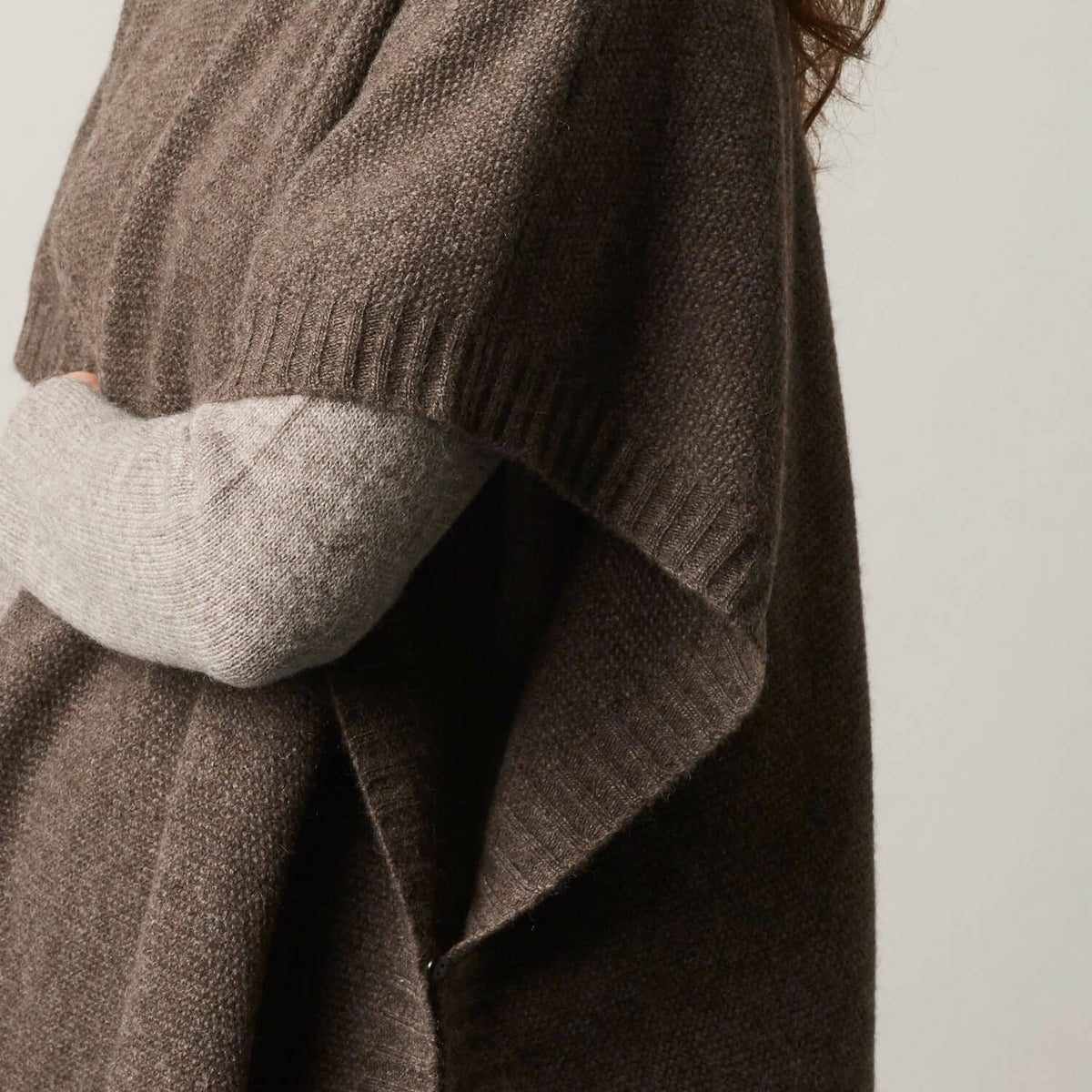
Yak wool from Mongolia deserves to be widely known. Because it is soft, hypoallergenic, and breathable. But also for its beautiful natural colors in shades of brown and gray.

The yak lives at incredible altitudes – sometimes as high as 5,000 meters in the Himalayan mountains! There are approximately 700,000 yaks in Mongolia, and the largest population is found in Arkhangai Province. The Mongolian yak is traditionally used as a draft animal, for wool, and as food. Now its wool is used to make
exclusive clothing.

Protects down to -40 degrees!

It has not been common to use yak wool for textiles in the West until recent years, when people finally realized all the many properties that wool possesses.

In order to survive the extreme conditions, it has developed a coat of wool. A protective outer layer and a denser inner layer insulate the yak, enabling it to withstand temperatures as low as -40°C.

The outer layers of yak wool are coarse and unsuitable for clothing. The undercoat, on the other hand, is covered with the softest fibers, which are usually finer than 20 micrometers in diameter. It is incredibly fine and produces the softest fabric that still retains heat. Yak wool is even 10-15% warmer than sheep's wool!


Wonder wool – durable, hypoallergenic, and breathable

With its many advantages, yak is the new exotic quality wool in the fashion industry. You ensure that your body is covered in luxury in the form of natural fibers. And just like the yak, which must stay warm even in a snowstorm, your body will stay warm even if your yak wool poncho, mittens, or wrist warmers get wet in the Danish slush.

If you are hypoallergenic, yak wool products are pure wonders, as they do not scratch the skin like other types of wool. In addition, yak wool is very breathable, even slightly more breathable than cashmere.

Yak wool is used for many different products. For example, yak wool scarves and hats are very popular. And in a cooperative in Arkhangai province - At ARVIJIN Delgerekh Cooperative - they are now working with a particularly fine variety called baby yak wool. It is even finer than normal. At Undarmaa, we buy it as
hand-spun yarn. It is slightly thicker and more irregular than machine-spun yarn, but wonderfully soft and something quite special.

Yak wool can of course be dyed, but it does not take dye as well as cashmere or sheep's wool. The result is a stiffer wool that is not nearly as comfortable as the natural-colored wool. The natural colors of yak wool are brown, dark brown, and gray, which we call plating gray. The gray color is rare, as it only
accounts for about 5% of the total amount of yak wool in Mongolia.

Yak wool is a good alternative to cashmere, as the two types are very similar in terms of softness. At the same time, yak wool is more durable and, not least, more sustainable. Yaks do not wear down the environment in the same way, as they do not uproot the grass when they eat.


Camel wool – wool with natural superpowers.

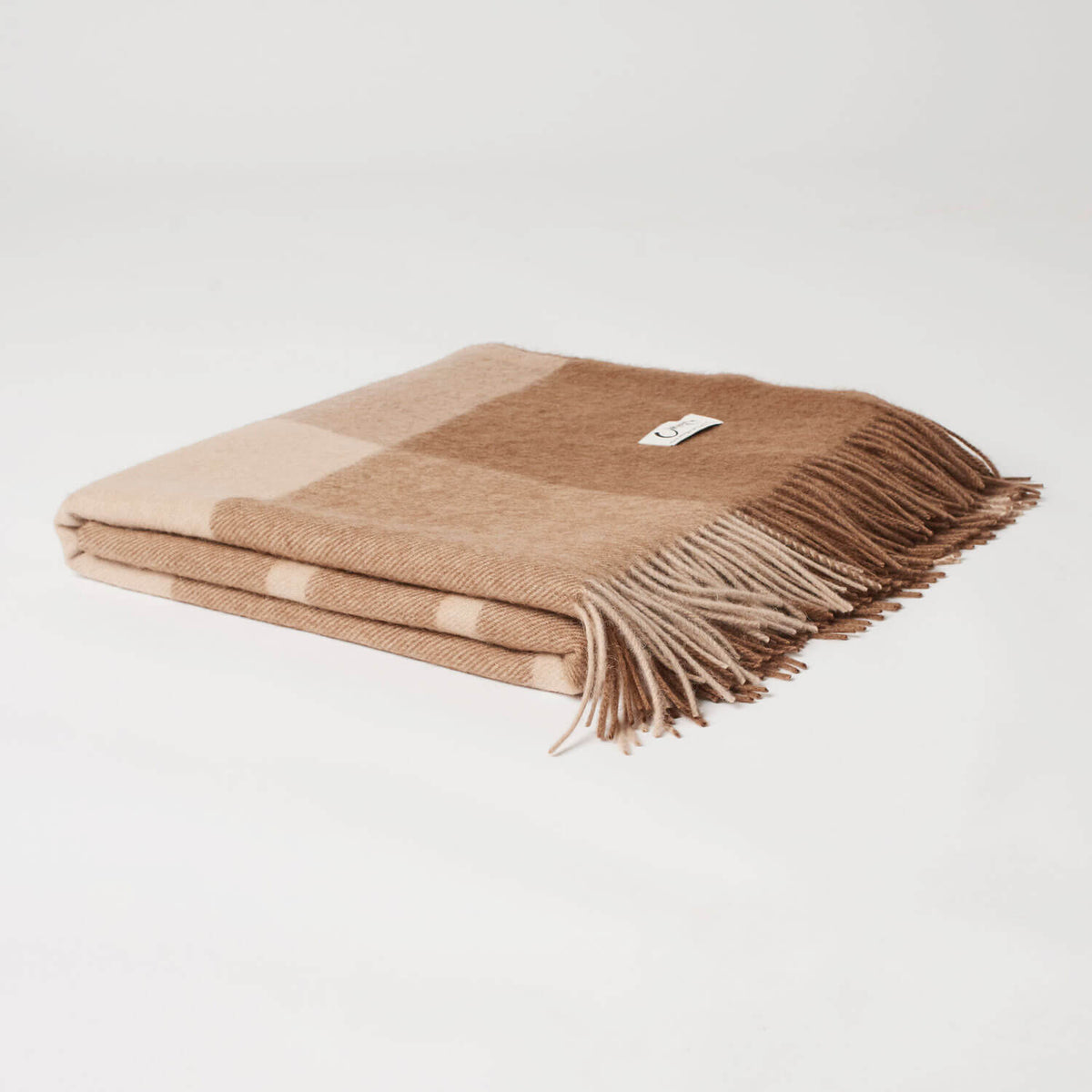
Camel wool has been known since ancient times. It is a fantastic wool that keeps you nice and warm and comes in a beautiful beige-brown color in both light and dark shades.

Camel wool has temperature-regulating properties, i.e. it keeps you warm and wicks away sweat, depending on whether you are cold or hot. In addition, the hollow fibers in the wool make it extra warm and light. Another thing I love about camel wool is that you also avoid static electricity when, for example, you pull your favorite sweater over your hair.

Moisture-wicking, warm, and soft fibers

Camel wool is characterized by having the highest amount of lanolin compared to other types of wool. Lanolin is a type of waxy substance with water-repellent properties. In nature, this substance helps protect camels from the harsh climate of the Gobi Desert, where temperatures can range from +35° in summer to -40° during the long winter months. Sudden and violent snowstorms are not uncommon here.

Camel wool comes in three shades of brown, which you can also find here at Undarmaa. Try our soft blouses and warm camel wool socks, or snuggle up on the sofa under one of our beautiful camel wool blankets. This type of wool does not take dye well, so the products are 100% naturally colored.

When's dinner? In 7 months!

In addition to the special qualities of its wool, the camel itself is an unusual animal. A camel can travel long distances and go up to seven months without drinking. When it needs nourishment, it can survive on dry vegetation that other animals do not eat. The camel is therefore incredibly well suited to the harsh climate of the Gobi Desert.

The number of camels has fallen dramatically in recent years. In 1985, there were over 500,000, today there are less than 300,000. The wild Bactrian camel has been so severely affected that it is now endangered. There is only a small population of about 800 living in a reserve in the Gobi Desert. However, there are still nomads who keep camels and harvest their wool. But this is a small minority, as the high price of cashmere attracts many.

The hair of a baby camel has fibers that are just as fine as the wool of a cashmere goat. If a baby camel is combed early enough, its hair is actually finer than that of a goat and thus a good alternative to the more famous and exclusive cashmere.