


Få producenter. Bevidst valgt.
We are a small specialist shop and work with a few producers in Mongolia. That makes it easier to follow materials, fit and quality closely — and to ask the same questions from season to season.
For us, it is not only about where a product is made, but also about who makes it, which materials are used, and how the product can last for many years.

We choose producers who can work with good natural materials, smaller production runs and a finish that suits Undarmaa’s expression.
This means we would rather work with a few regular producers than keep switching based on price. When we return to the same partners, we can adjust fit, quality and details over time.
Our aim is to know the producers we work with — not only as suppliers, but as part of the way the products come into being.
That is why we visit them, talk about materials and samples, and follow up on what can be improved. It does not give full control over everything, but it gives a better chance to choose well and ask better questions.

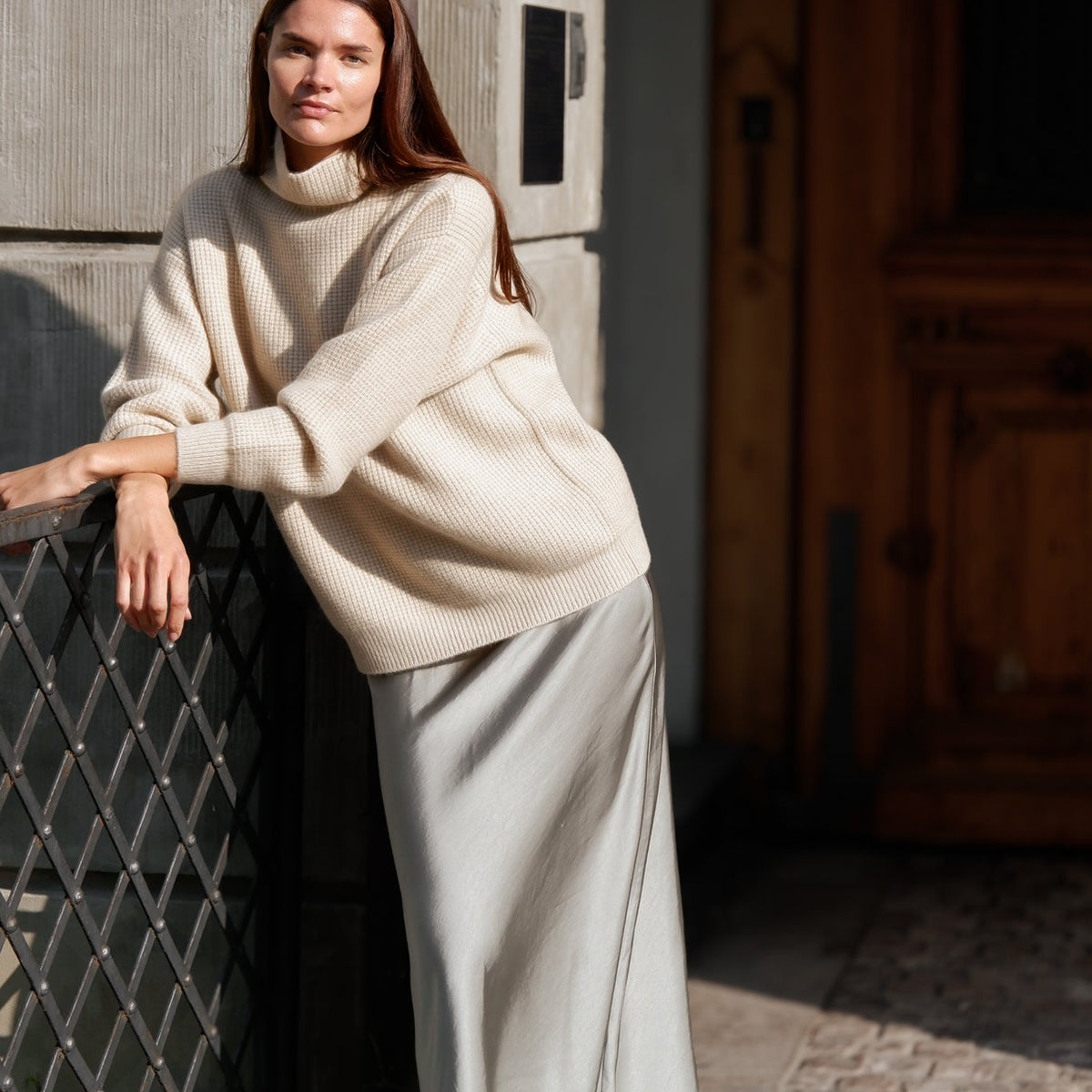
Some of our cashmere knitwear is made in Ulaanbaatar by producers experienced in knitwear for a cold climate. The cashmere they work with comes from herders in Khuvsgul province in Mongolia’s northernmost region, where harsh winters produce fibres of extra length and fineness.
Here we work mainly with classic designs, where the quality of the material, fit and finish matter more than quick seasonal changes. These are products meant to be used for a long time and to feel natural in a Nordic wardrobe.

Other parts of our range are produced in smaller runs, where we can work more closely with expression, colours and materials.
We do not choose many new styles each season. Instead, we try to improve and repeat the designs that work — with adjustments to fit, yarn, colours or finish.

For some products, we work with producers experienced in more practical, warm products in natural fibres.
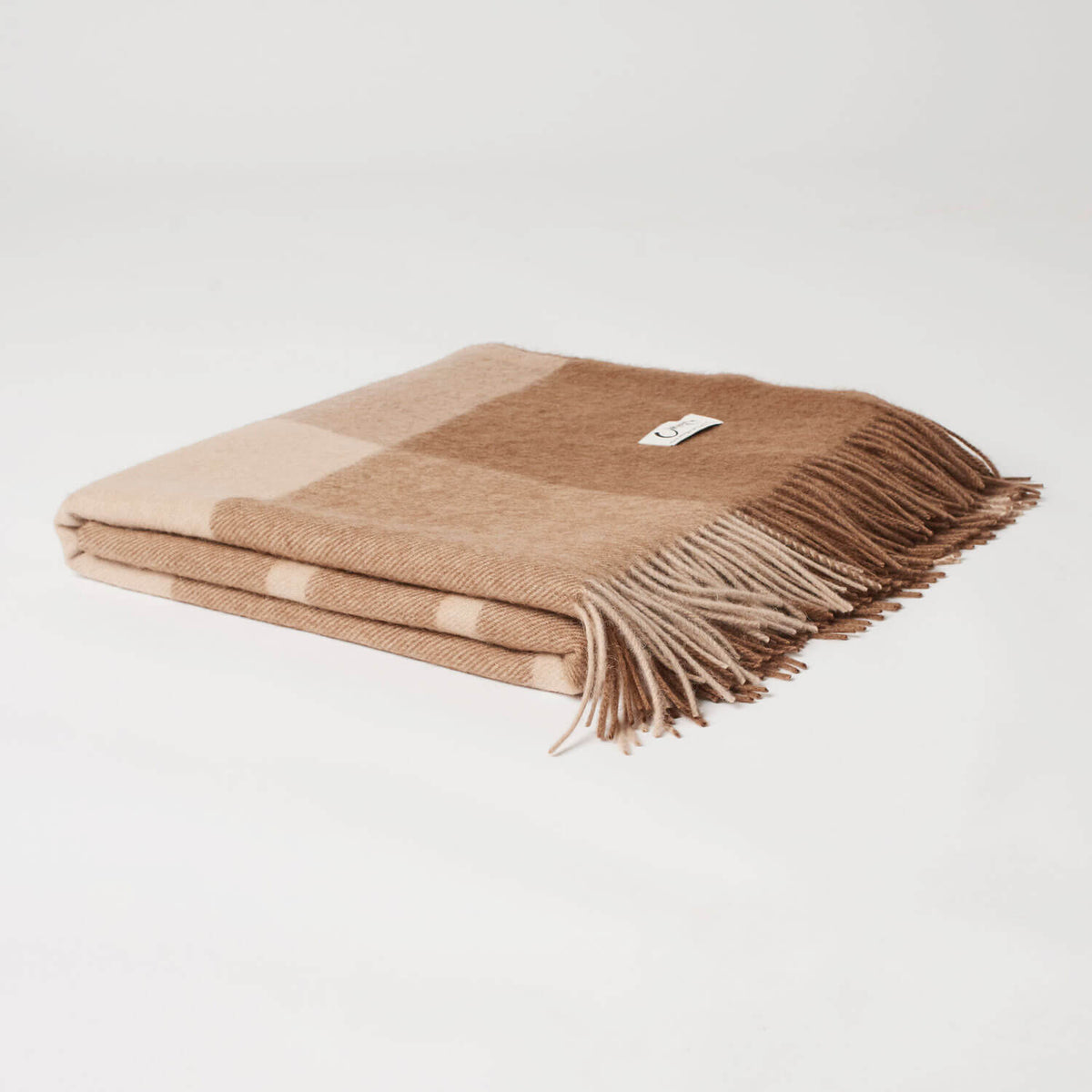
This includes smaller accessories and knitwear where function, comfort and choice of material matter more than trends. Here we mainly choose products that make sense in a cold everyday life.
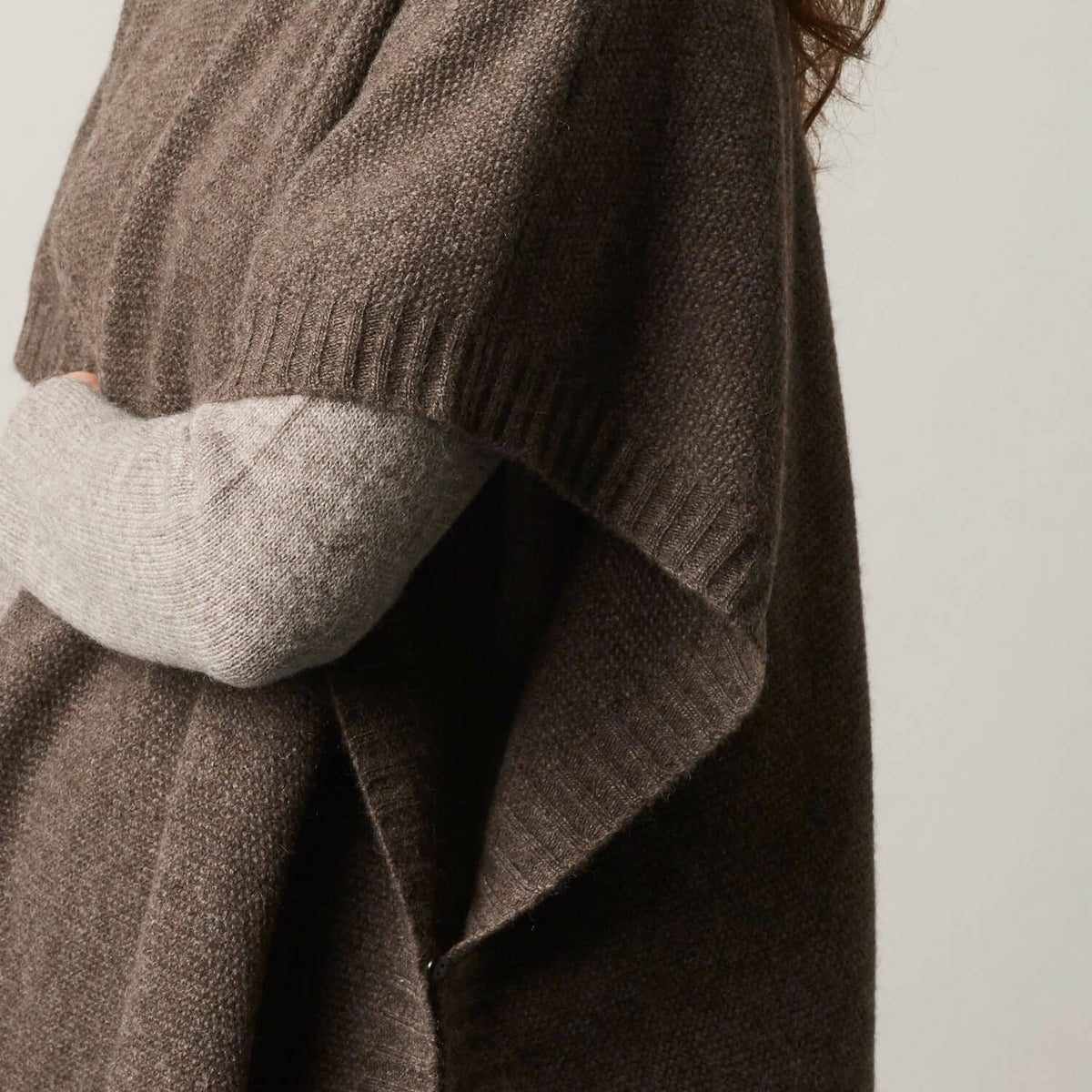
We work with cashmere, yak wool and camel wool from Mongolia. The materials are part of everyday life on the steppe and have been used for generations because they are warm, light and naturally insulating.
For us, origin matters, but it has to be explained soberly. That is why we are working to get better at documenting where the materials come from and how they move through the value chain.
Mongolia has vast grasslands, but the resources are not unlimited. Millions of animals live on the steppe, and climate, grazing and demand for fibre all affect the land.
That is why cashmere is not only a soft luxury material. It is also a raw material that must be handled with care. We cannot solve the industry’s challenges alone, but we can choose our materials and partners with greater care.

One of our partners is Eeltei Baylag (formerly the Sustainable Cashmere Union) — a cooperative network of nomads in the Arkhangai, Bayankhongor and Khentii provinces. The network works concretely on rotational grazing, animal welfare and training for herders, and has been developed over a long period in collaboration with the French NGO AVSF.
It is not a guarantee that everything is perfect — but it is the kind of structure that makes it possible to choose materials that are more carefully considered than ordinary standard goods.
In Arkhangai province, nomadic families have joined together in the Ar Arvijin Delgerekh cooperative and hand-spin yarn from baby yak — the wool of the very young animals, which is even finer than usual. We have worked with their yarn, and it is exactly the kind of small, dedicated producer we want to get closer to.
We can document that our products are made in Mongolia, and we are in ongoing dialogue with our producers about materials, fit and quality.
At the same time, we are working to document the origin of the materials more precisely. In the cashmere industry it is not always simple to trace the fibres all the way back to specific areas or herding families, but it is an area we want to improve.
For you as a customer, this means that every product at Undarmaa is chosen with a focus on material, function and durability — not only on price or the season’s trends.
Read on
Our approach is simple: fewer producers, closer relationships and products chosen to last.
Read more about the story behind Undarmaa — or see our guide to cashmere, yak and camel wool.
