


The three fibres
Cashmere, yak wool and camel wool are all natural fibres from animals on the Mongolian steppe, and their care follows the same basic principles we cover on the main care page. But each fibre has its own story and its own nuances that are worth knowing — both to understand what you're wearing, and to get the most out of it.
Cashmere

Cashmere comes from the cashmere goat's undercoat — the fine, short layer that grows close to the skin to keep the animal warm through winter. When spring arrives and the frost lets go, the goats naturally shed their undercoat. At the producers we work with, it's gathered by combing the goats (the goats are not shorn). A single animal yields around 200 grams of usable cashmere a year, and it typically takes cashmere from three goats to knit one sweater.
Cashmere has the finest fibre of the three wool types, around 14-16 microns. That's what makes it so soft. But it's also why cashmere needs gentler handling than ordinary wool: the finer the base fibre, the more easily it loses its shape under rough washing. So cold or lukewarm water, mild soap and no rough wringing all matter.
Yak

The yak is the large, long-haired ox that lives higher up on the Mongolian steppe, in the mountain regions to the north. The yak's wool comes from its undercoat — the innermost layer beneath the coarse outer guard hair — and is likewise shed in spring. Yaks are adapted to some of the harshest winters on earth, down to -40°C, and it's that ability, as with goats and camels, that makes the wool so warm.
In practice, yak wool is somewhat more robust than cashmere. The fibres are a touch coarser (typically 17-19 microns), which means less pilling and a little more durability. Yak wool is cared for the same way as cashmere — cold water, mild soap, drying flat on a towel.
Finally, yak is the gentlest of the three fibres on the landscape. Yaks graze less intensively than goats and so don't wear down the steppe's grass in the same way.
Camel wool

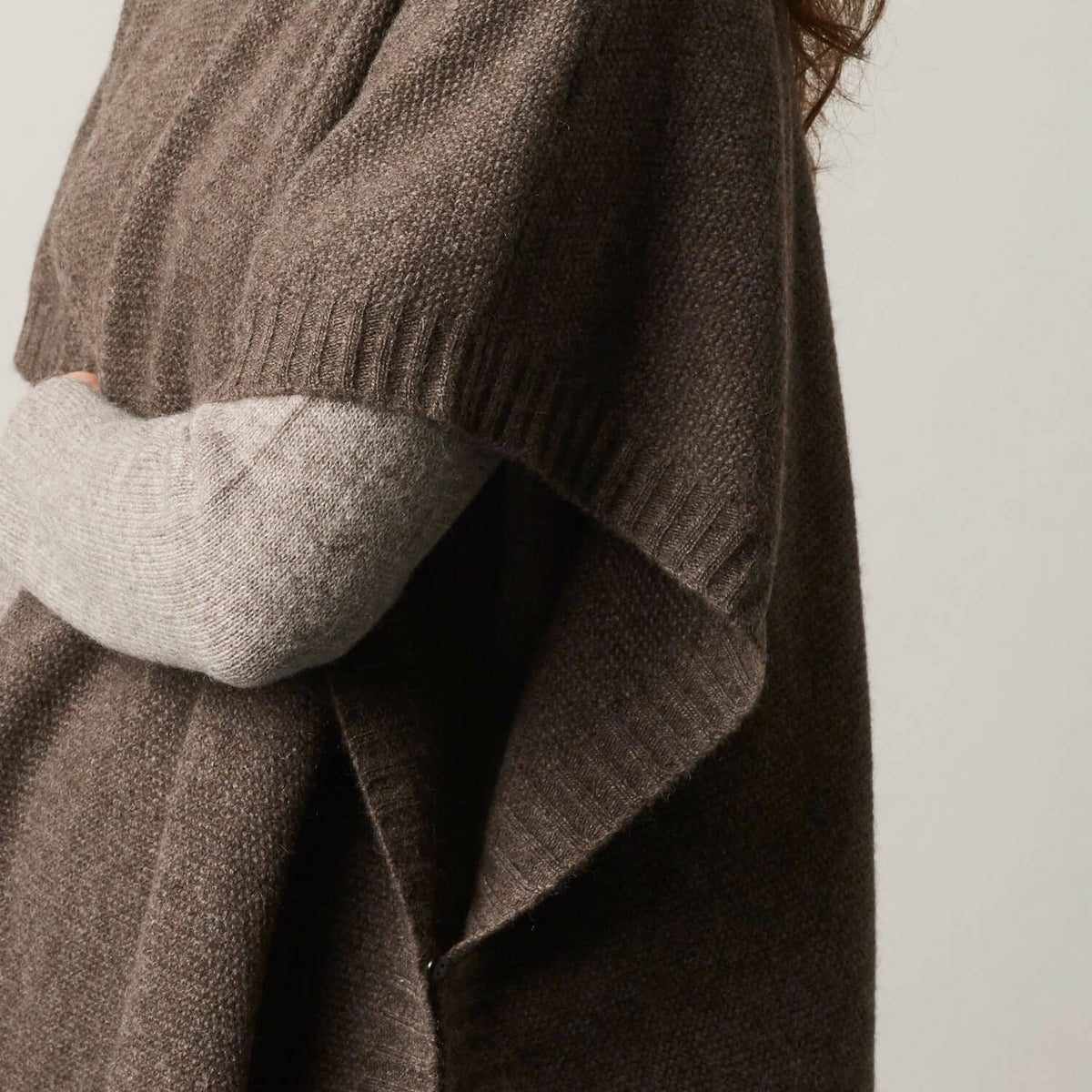
Camel wool comes from Mongolia's Bactrian camels — the two-humped camels that live in the Gobi Desert in the southern part of the country. The camels withstand one of the world's most extreme climates: winters down to -40°C and summers up to +40°C, and their wool has developed to handle both extremes. It's the innermost undercoat that becomes camel wool in clothing.
The camel fibre is special in that it's hollow inside — it has a tiny air channel at its core — which makes it extraordinarily insulating. A thin layer of camel wool holds as much warmth as a thicker layer of ordinary wool. The fibres typically measure 19-22 microns, so a little coarser than cashmere but finer than ordinary sheep's wool.
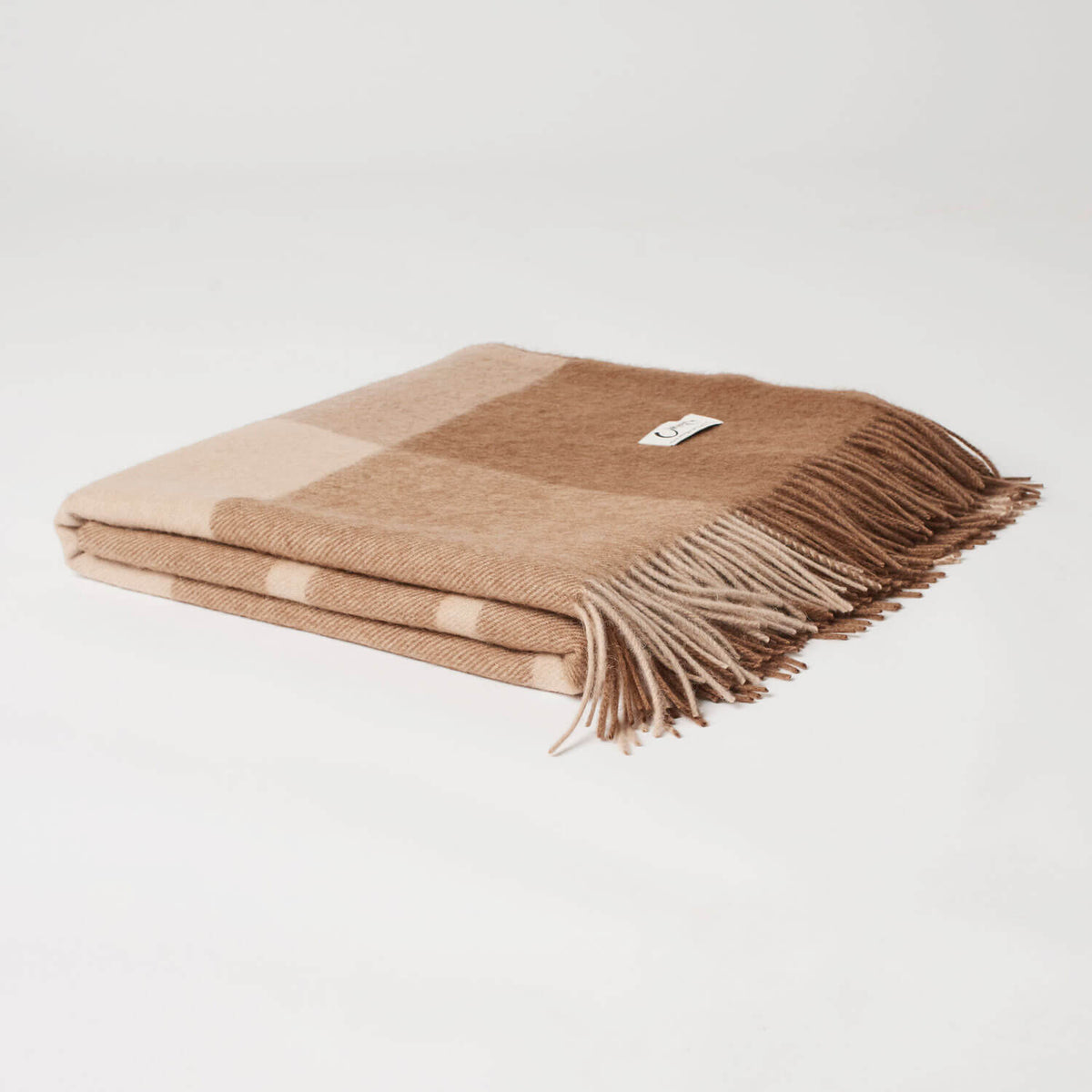
The natural colour is a warm beige-brown tone that makes camel wool beautiful to look at as a raw, undyed fabric. It's also why our camel wool products stay in their natural colours. The care method is the same as for cashmere and yak wool: lukewarm or cold water, mild soap, drying flat on a towel.
Also read: Care and washing · Repair · Back to the main page
