

Care and washing
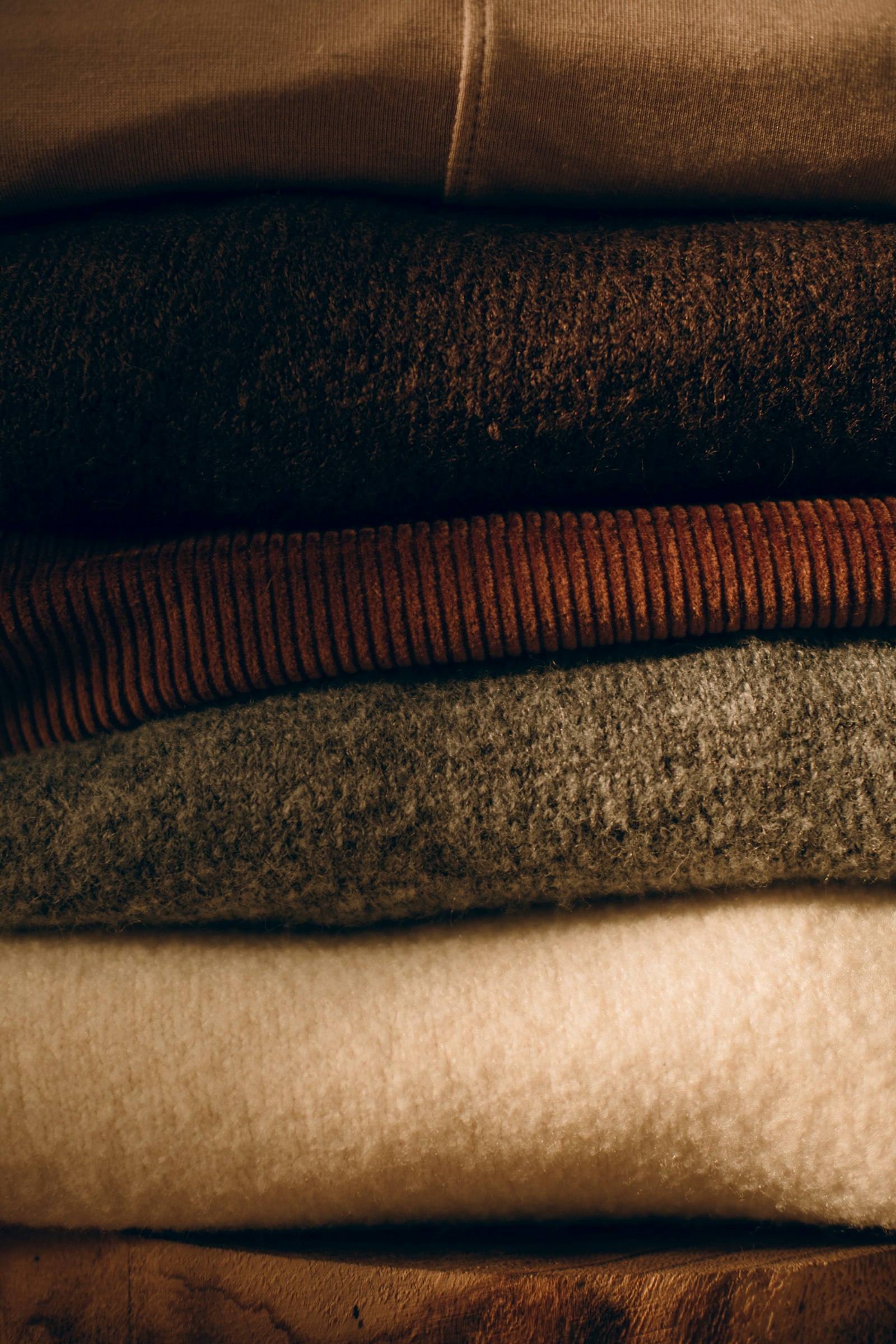
This page covers the practical aspects of wearing fine wool in everyday life, including daily wear, washing, drying, storage, pilling, and stains. And most of it actually comes down to doing a little less rather than a lot more.
Everyday use
The most important rule for wearing fine wool in everyday life is to do less. The fibers have a natural ability to take care of themselves—heat, odors, and moisture from wear disappear in fresh air, and you rarely need to wash them.
Once you’ve taken off your clothes, don’t fold them or put them directly in the closet. Sweat and dirt attract moths, which can eat holes in the fabric. Instead, hang your clothes on a hanger and let them air out—preferably by an open window in dry weather. Another well-known trick is to hang your sweater in the bathroom while you take a hot shower. The steam softens the fibers and removes wrinkles.
A fine wool garment should be left to rest for at least 24 hours between wears. This gives the fibers time to return to their original shape. If you have several wool sweaters, it’s a good idea to rotate them rather than wearing the same one day after day.
Sink
First and foremost: wash sparingly. Cashmere, yak, and camel wool are self-cleaning, and frequent washing is a common way to wear out a good garment. Three or four washes a year are plenty—even for clothes you wear often. Treat stains separately (see the section below).
Washbasin
Hand washing is the safest method for delicate wool:
- Fill the sink with lukewarm water (about 30°C—the water should feel neither too hot nor too cold).
- Add wool detergent. Avoid regular laundry detergent and fabric softener—regular laundry detergent is alkaline and hardens the fibers, while fabric softener leaves a film.
- Place the clothes in the water and gently press them under the water with your flat hands for 5–10 minutes. Do not rub or wring them out.
- Rinse with cold water until all the soap is gone—change the water a couple of times if necessary.
- Squeeze out the water using your flat hands against the bottom of the tub. Never wring it out— that stretches the fibers.
Machine wash
Many modern washing machines have a wool cycle, which can actually be gentler than hand washing because the temperature and agitation remain constant. If you want to wash it in the machine:
- Wash on the wool cycle at 30°C, no higher
- Put the clothes in a laundry bag so they don't rub against the drum or the buttons on other clothes
- Use wool detergent; do not use fabric softener
- Turn off the spin cycle, or set it to the lowest speed—a high spin cycle can distort the shape
We recommend machine washing for knitwear. Woven throws should always be sent to a professional cleaner —they are too large and heavy for home washing, and the fibers are particularly prone to stretching when the throw is wet.
Drying and storage
Drying
Once the garment has been washed—by hand or in the washing machine without spinning—it should be dried flat. Lay it on a dry towel and gently shape it into the correct fit while it is still damp. This is when you determine the shape of the sweater; once it is dry, it will set in the shape it is in.
Do not hang fine wool to dry, either on a hanger or a clothesline. The weight of the wet garment distorts its shape and stretches the fibers. Direct sunlight will fade the colors over time, and direct heat (from a radiator or hair dryer) can cause the fibers to felt—instead, dry the garment in a well-ventilated room at room temperature.
Storage
During the season—which is most of the year—you can store your woolen garments folded flat in a drawer. Don’t hang them in a closet for long periods of time; the hanger will gradually pull the shoulders down. The blanket can be folded over a chair or laid flat in an open space.
For long-term storage —such as summer storage—it is important to:
- The clothes are clean and completely dry. Moths are attracted to sweat and skin oils.
- Fold it into a cotton bag or a sealed box (don’t let the plastic touch the fibers directly—it can cause condensation).
- Place lavender sachets or cedar wood next to them. Both repel moths without leaving a chemical odor.
If you notice signs of moths (holes or small eggs) on a piece of wool, place it in a sealed bag in the freezer for at least 24 hours —this will kill both the eggs and the larvae. Let it thaw in the bag before taking it out to prevent condensation from forming on the fibers.
Ironing and steaming
In most cases, you don’t need to iron fine wool. It has a natural ability to smooth itself out—especially if you hang the garment in the bathroom while you shower, or by an open window after wearing it.
If you need to smooth out wrinkles, use a garment steamer instead of a regular iron. The steamer adds moisture and heat without flattening the fibers. Hold it 10–15 cm away from the fabric and let the steam do the work.
If you don’t have a steamer, you can use an iron set to the wool setting with steam. Always place a damp dish towel or cotton cloth between the iron and the wool garment—direct contact can melt or damage the fibers, especially on cashmere. Iron lightly and without applying pressure.
Pilling
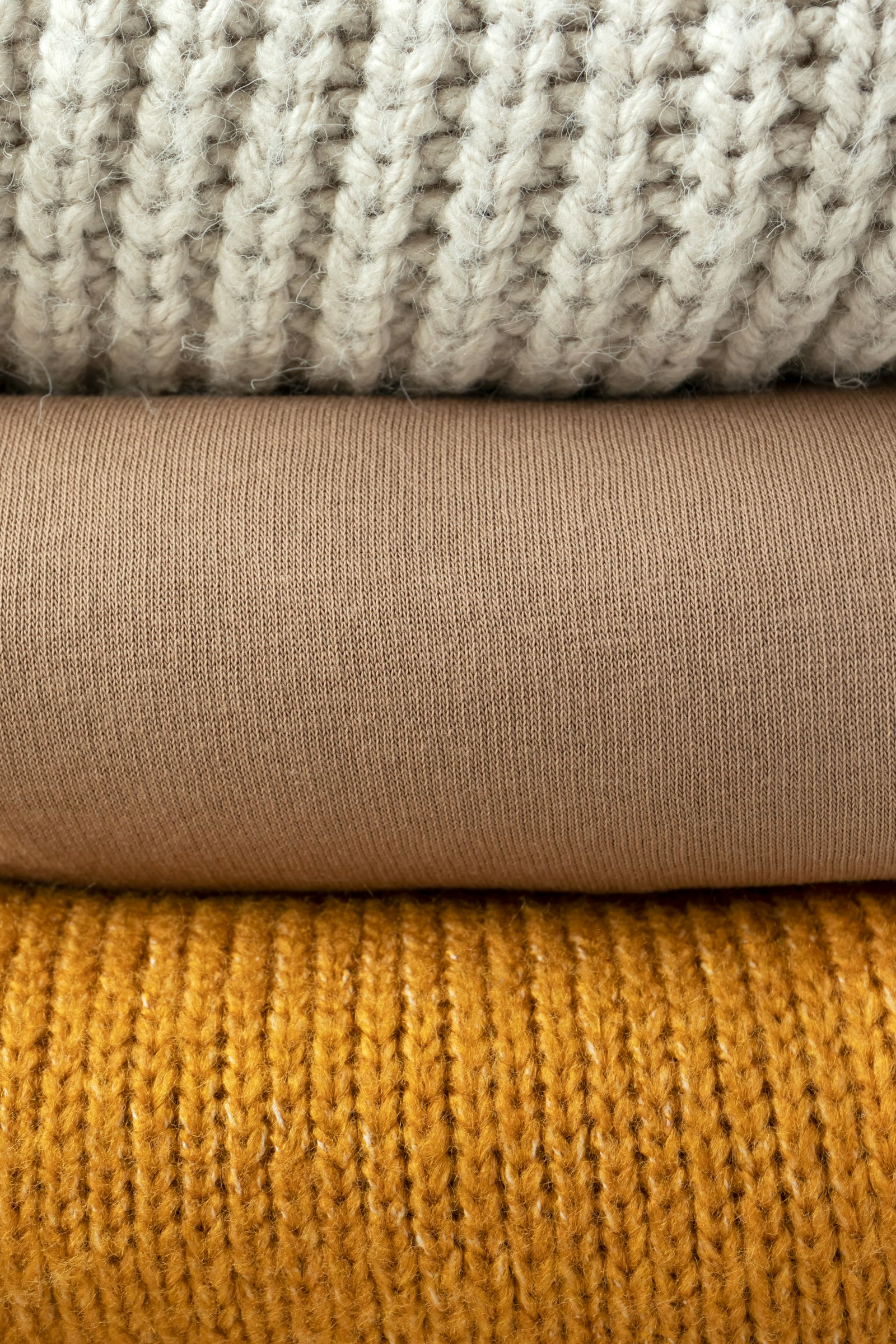
Pilling—those little balls of fiber that form on the surface—is a natural occurrence with all wool fibers, especially cashmere. It is not a sign of poor quality, but rather an indication that the fibers are short and soft enough to form them. The areas of the garment that are exposed to the most friction—under the arms, along the sides where a bag hangs—will therefore always be the first to show pilling.
After the first few times you wear a new cashmere garment, pilling will be at its worst. Once you’ve removed the pills, the amount will gradually decrease, and after a season or two, the garment will be almost pill-free.
How to remove lint:
- A lint comb (a small comb with soft teeth) is the gentlest method. Gently run it over the surface—it catches the lint without pulling on the underlying fibers.
- Pay special attention to small areas. Gently pick off the lint.
- An electric lint remover works quickly on large surfaces, but can cut too deeply if you press too hard. Use it gently, and hold it in the same spot for only a moment at a time.
A good rule of thumb: remove lint before washing, not after. Washing pushes the tiny lint balls deeper into the fabric, making them harder to remove.
Stains
Stains on fine wool are rarely a disaster, but they need to be treated quickly and gently —the longer they sit, the harder they are to remove.
Basic principles:
- Dab, don't rub. Place a clean cloth or paper towel on the stain and press gently to absorb the liquid. If you rub it, the stain will be pushed deeper into the fibers, and you risk causing them to mat.
- Use cold or lukewarm water, never hot. Hot water sets many types of stains (especially protein-based stains such as blood, egg, and milk).
- Avoid stain removers designed for cotton and synthetic fibers—they are often too harsh for wool and can damage the color.
For typical stains:
- Wine, coffee, tea: Rinse immediately with cold water. Apply a small amount of wool detergent directly to the stain and let it sit for 5 minutes before rinsing again.
- Grease and oil: Dab the stain with a soft cloth dampened with cold water and a drop of mild dish soap. Press it into the stain, let it sit for a moment, then rinse.
- Blood: Rinse immediately with cold water. Never use hot water—it causes the blood to set in the fibers.
For stains that won’t come out, as well as throws and particularly delicate garments, send the items to a professional dry cleaner. It’s best to choose a dry cleaner with experience handling natural fibers and ask them to treat the items gently.
See also: The Three Fibers · Repair · Back to the main page
